

Squint Cognition
Delivering
Trustworthy
AI in High-Stakes
Industries

Artificial Intelligence is rapidly transforming industries with predictive accuracy and automation at scale. But accuracy alone is not reliability. In environments where the cost of failure is measured in human lives, financial stability, or critical infrastructure, AI’s fragility is the limiting factor.
Deep learning systems achieve high accuracy in controlled environments, but in production they often fail unpredictably. High-confidence errors, distribution shifts, and unrecognized ambiguity undermine trust. This is why regulators, industry leaders, and research institutions agree: for AI to fulfill its promise in high-value sectors, it must evolve from opaque pattern recognition into contextually intelligent, accountable systems.
Squint Cognition delivers that evolution. By embedding contextual intelligence and real-time cognitive monitoring into the AI lifecycle, Squint Cognition ensures AI can identify uncertainty, anticipate mistakes, and adapt in real-world conditions.
The result: AI systems that not only perform well but think well enough to be trusted.
Aviation & Aerospace
Cognitive safety nets
Current challenge
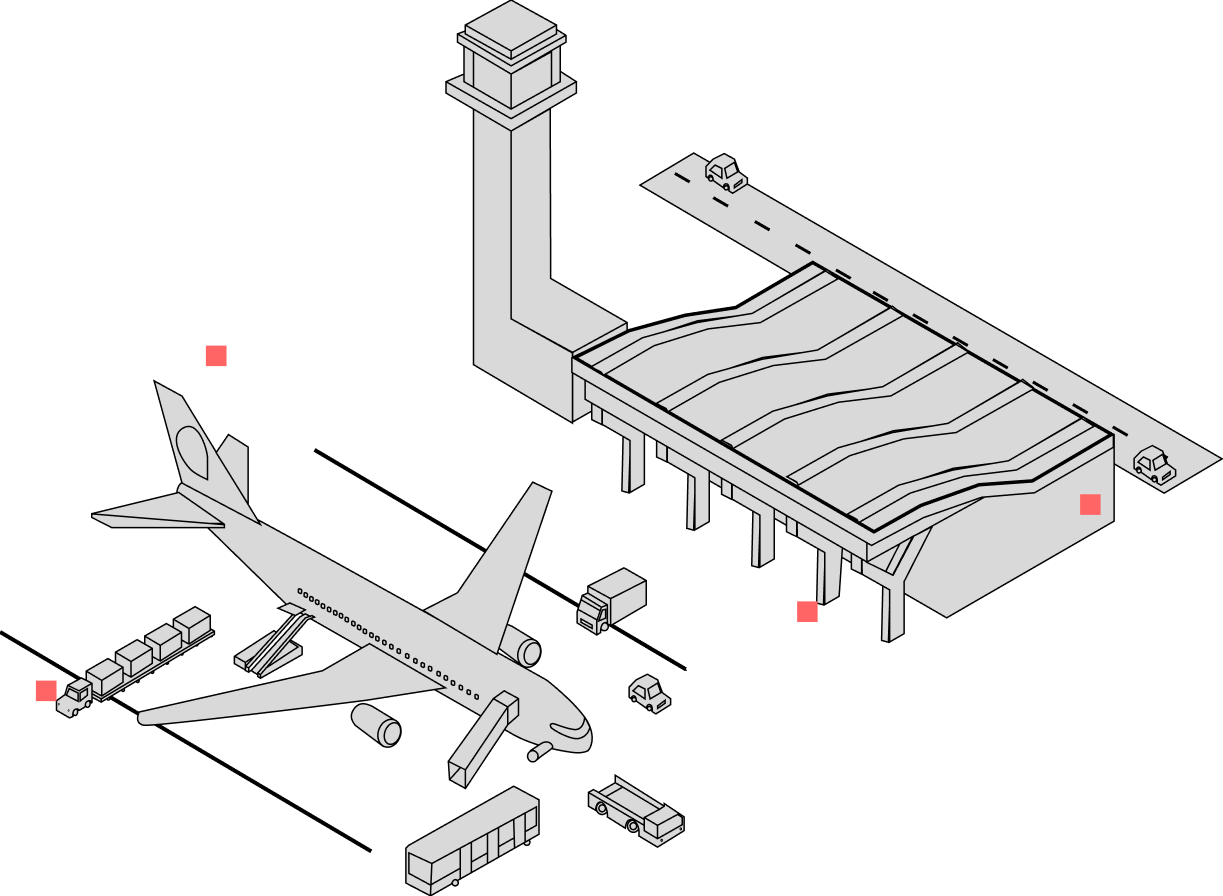
Autonomous flight systems and avionics rely on AI for navigation, landing, and anomaly detection. But a single high-confidence mistake can lead to catastrophe.
Squint advantage
Monitors sensor fusion and cockpit display models in real time.
Detects contextual mismatches between telemetry and visual data.
Signals pilots when a decision cannot be trusted, enabling human override.
Impact
- Safety-compliant AI deployments.
- Reliable automation in complex, high-entropy conditions (e.g., poor weather).
- Confidence for regulators (DO-178C/DO-330 environments).
Healthcare
Diagnostics you can trust
Current challenge
Autonomous flight systems and avionics rely on AI for navigation, landing, and anomaly detection. But a single high-confidence mistake can lead to catastrophe.
Squint advantage
Identifies clusters of ambiguous biopsy images (e.g., cancer grades with overlapping features).
Squint Advantage
Flags predictions in error-prone regions before they reach a clinician.
Squint Advantage
Ensures only high-confidence, contextually reliable diagnoses are automated.
Impact
- Safety-compliant AI deployments.
- Reliable automation in complex, high-entropy conditions (e.g., poor weather).
- Confidence for regulators (DO-178C/DO-330 environments).
AUTOMOTIVE
From ADAS to autonomous vehicles
Current challenge
Advanced Driver Assistance Systems (ADAS) and AV stacks face functional safety requirements (ISO 26262). Confidence thresholds are insufficient: cars can still make high-confidence errors in perception and planning.
Squint advantage
Creates watchdogs around edge-case clusters (e.g., pedestrians in unusual lighting).
Enables selective escalation to larger, safer models for critical decisions.
Provides runtime evidence for regulators that ambiguous predictions were identified and mitigated.
Impact
- Fewer safety-critical blind spots.
- Greater readiness for regulatory certification.
- Trust in autonomy as systems move from pilot programs to public deployment.
Finance
Guardrails against model risk
Current challenge
Banks and asset managers deploy AI for fraud detection, trading signals, and credit risk. Yet regulators (SR 11-7, EU AI Act) demand proof that models operate reliably under shifting market conditions. Traditional monitoring misses high-confidence false negatives - leading to financial loss and reputational damage.
Squint advantage
Flags predictions made outside stable data clusters.
Squint Advantage
Detects distribution shifts in real time (e.g., during volatility or crises).
Squint Advantage
Provides continuous, auditable “effective challenge” for model governance.
Impact
- Reduced financial risk exposure.
- Lower compliance burden with real-time model assurance.
- Operational resilience in unpredictable markets.
Defense & Security
Reliability in contested environments
Current challenge
AI systems for ISR (intelligence, surveillance, reconnaissance) and decision support face adversarial and novel conditions. Conventional AI cannot detect when it is operating outside its competence.
Squint advantage
Detects novel or adversarial conditions via contextual analysis.
Flags unreliable predictions before they escalate into mission-critical errors.
Supports human-in-the-loop decision-making with clarity.
Impact
- Enhanced trust in AI-enabled defense systems.
- Reduced risk of high-confidence misjudgments in contested environments.
Energy & Utilities
Reliability under complexity
Current challenge
AI is increasingly used to manage grid stability, forecast demand, and prevent outages. But energy systems operate in high-entropy, complex environments - meaning model drift can cause cascading failures.
Squint advantage
Monitors predictive models for degradation as conditions shift (e.g., demand surges, renewables variability).
Squint Advantage
Detects ambiguous regions where predictions are less trustworthy.
Squint Advantage
Prevents silent failure of models that control critical infrastructure.
Impact
- More resilient energy grids.
- Proactive maintenance of AI pipelines.
- Increased trust for regulators overseeing critical national infrastructure.
Industrial Manufacturing
Precision and quality
Current challenge
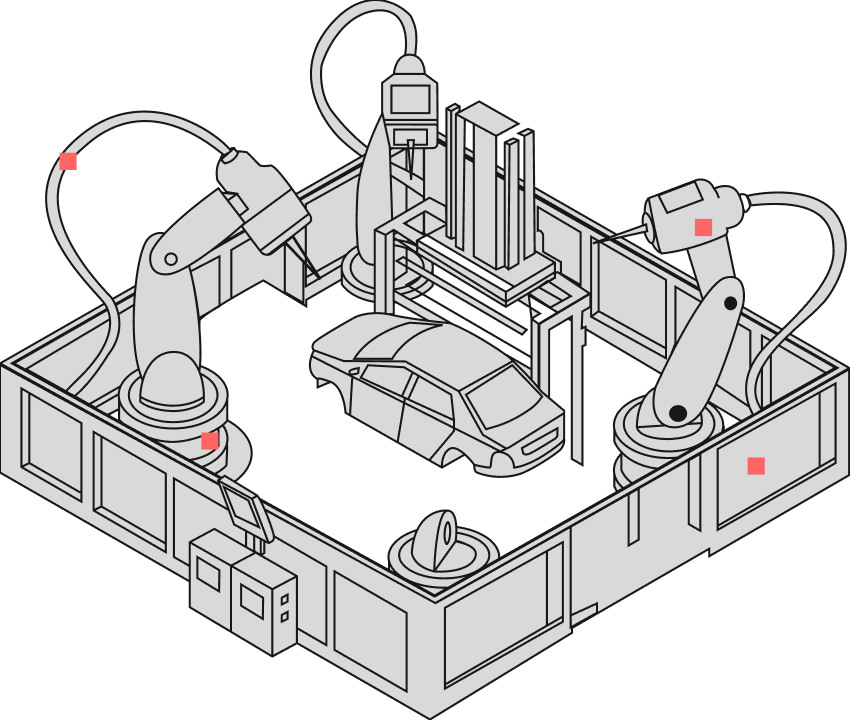
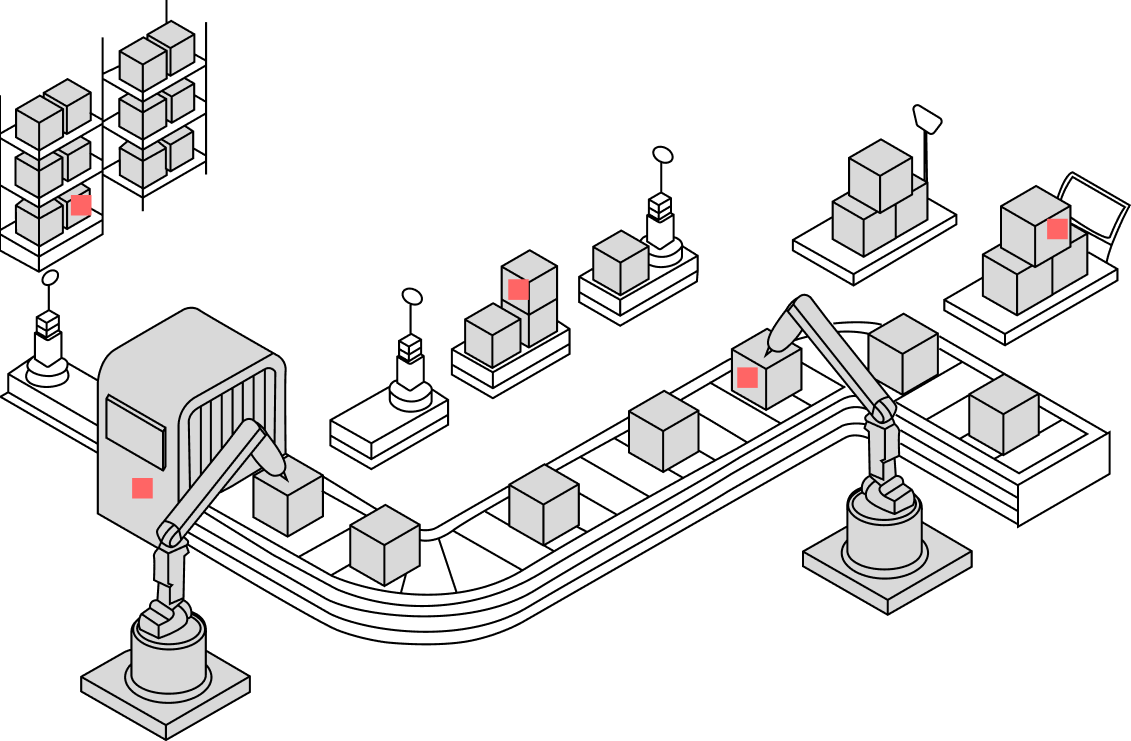
Vision-based quality inspection models drift when lighting, equipment, or product lines change. High-confidence false negatives allow defective products to escape undetected.
Squint advantage
Identifies clusters of ambiguous defects.
Detects environmental drift in real time.
Ensures watchdogs filter unreliable predictions before products ship.
Impact
- Higher production reliability.
- Lower cost of defects and recalls.
- AI systems that scale confidently across factories and regions.
Insurance & Medical Payers
Reducing bias and preventing costly errors
Current challenge
Insurers and payers increasingly deploy AI for claims automation, prior authorization, fraud detection, and risk adjustment. But bias, opaque denials, and high-confidence errors in sensitive cases can trigger regulatory scrutiny, patient harm, and reputational damage.
Squint advantage
Maps clusters of ambiguous claims where AI is more likely to misclassify or over-flag.
Squint Advantage
Provides contextual explanations for decisions - enabling auditability and compliance with healthcare and insurance regulators.
Squint Advantage
Detects drift in fraud models, ensuring they adapt to new fraud tactics without overfitting or mislabeling.
Impact
- Lower legal and compliance risk.
- Fairer, more transparent claims processing.
- Reduced false positives in fraud detection, lowering costs while preserving trust.
Pharmaceutical R&D
Reducing false leads
Current challenge
Drug discovery AI models often chase spurious correlations, generating false positives that inflate R&D costs.


Squint advantage
Identifies contexts where candidate predictions are unreliable.
Ensures generative chemistry models focus on trustworthy regions of chemical space.
Provides scientific rationale behind predictions to regulators and researchers.
Impact
- Fewer wasted trials.
- Faster go/no-go decisions.
- Greater confidence in AI-augmented pipelines.
Transportation & Logistics
Reliability in dynamic conditions
Current challenge
AI systems now manage supply chain routing, fleet optimization, port automation, and OCR-based customs clearance. These systems face constant volatility from weather, demand shocks, and geopolitical disruptions. Conventional models often fail silently when conditions shift.
Squint advantage
Detects distributional drift in routing models when market or environmental conditions deviate from training data.
Squint Advantage
Flags predictions made in ambiguous regions (e.g., unstructured bills of lading in OCR pipelines).
Squint Advantage
Provides real-time cognitive monitoring that escalates decisions to human operators when uncertainty is high.
Impact
- Resilient logistics pipelines that adapt to uncertainty.
- Lower cost of delays, errors, and supply chain failures.
- Greater trust in AI-managed automation across ports, warehouses, and fleets.
The Value Proposition
Across tier 1 industries, the equation is clear:
Conventional AI =
{high accuracy but unpredictable risk}
.webp)
SQUINT Cognition =
{contextual awareness + continuous reliability}
By embedding discovery, deployment, and maintenance into a unified cognitive framework, SQUINT transforms AI from fragile predictor into trusted infrastructure. or decision makers, this means AI that is:


This is the value proposition of SQUINT Cognition: AI that finally thinks in context—delivering reliability where it matters most.